---
title: "Property valuation in a forced sale or auction in Rotterdam: how to frame the brief"
description: "Frame a Rotterdam forced-sale valuation around requester, property rights, access, condition, value date, evidence and the limits of an auction outcome."
url: "https://taxateurrotterdam.pro/en/forced-sale-valuation-rotterdam/"
locale: "en"
author: "Taxateur Rotterdam Pro editorial team"
publishedDate: "2026-09-07T00:00:00.000Z"
updatedDate: "2026-09-17T00:00:00.000Z"
categories: "Forced sale and auction valuation"
tags: "forced sale property valuation Rotterdam, auction valuation Rotterdam, mortgagee sale valuation, property valuation auction"
---
# Property valuation in a forced sale or auction in Rotterdam: how to frame the brief
Frame a Rotterdam forced-sale valuation around requester, property rights, access, condition, value date, evidence and the limits of an auction outcome.
A forced sale or auction creates a valuation question with legal and practical constraints. The mortgagee, owner, buyer, adviser or court-related process may need different information. A useful brief names the requester, property rights, access, condition, value date and intended decision. A market valuation does not predict the auction proceeds and does not replace notarial, legal or lender advice.
For a forced-sale file, name the requester, access conditions, rights and valuation date before you compare a market conclusion with an auction outcome.
## TL;DR: separate value from auction outcome
In a forced sale, the property may be sold by a mortgagee under the conditions of the security and the applicable process. Access can be limited, occupation can continue and the buyer may face unknown repair or legal facts. Ask for an opinion of value under stated assumptions, then keep the sale conditions and debt settlement with the relevant professionals.
Use the valuation to make the property facts and evidence visible. Do not describe it as a guaranteed selling price, a legal opinion or a promise that a lender will accept a particular amount.
Before you compare the report, align your purpose, recipient and evidence with official valuation guidance.
For this assignment, keep the relevant property or file facts beside official valuation guidance before you rely on the conclusion.
When your file raises a related question, compare the facts with what is a property valuation report before you choose the report scope.
When your file raises a related question, compare the facts with commercial property valuation Rotterdam before you choose the next step.
Before you compare the report, align your purpose, recipient and evidence with official valuation guidance.
For this assignment, keep the relevant property or file facts beside official valuation guidance before you rely on the conclusion.
When your file raises a related question, compare the facts with [what is a property valuation report](/en/what-is-a-property-valuation-report/) before you choose the report scope.
When your file raises a related question, compare the facts with [commercial property valuation Rotterdam](/en/commercial-property-valuation-rotterdam/) before you choose the next step.
## Context that informs this decision
Property valuation report contents helps check whether identity, purpose, evidence and limits are visible.
Commercial property valuation in Rotterdam keeps those income and rights questions visible when the forced sale concerns business use.
For the provider conversation, questions for choosing a reliable property valuer keeps registration, scope, evidence and independence in view.
If you are reviewing a forced sale, compare auction conditions and creditor questions with the address evidence in [a property valuation in Sterksel](https://taxatieeindhoven.com/property-valuation-sterksel/), keeping the Rotterdam file specific.
If the technical scope remains open, contact us about a forced-sale valuation with a short question and no personal documents.
## Who needs this preparation
This fits an owner who has received a lender notice, a professional preparing a file, an adviser comparing evidence or a buyer assessing a property offered under unusual conditions. Each reader needs a different question, so put the recipient in the first line of the assignment.
## Before the assignment
Write down:
1. Who requests the valuation and who will receive it.
2. The property identity, ownership, mortgage or other security.
3. Whether the property is vacant, occupied, rented or inaccessible.
4. The value date, inspection date and decision the report will support.
5. Known notices, restrictions, defects, arrears or sale conditions.
Do not send passports, contracts, bank details or other personal documents through a public contact form. List the records and ask how they should be transferred securely.
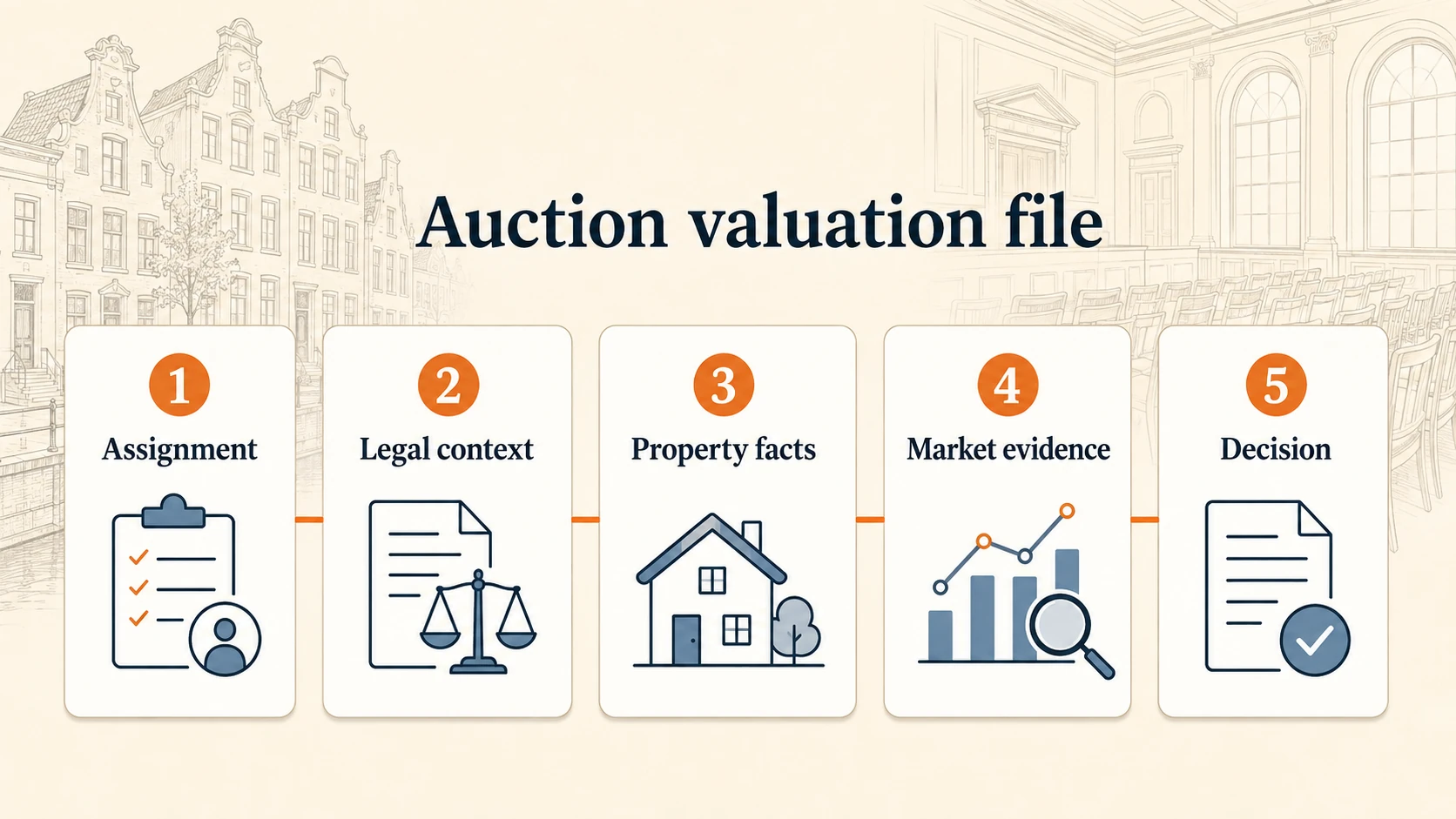
## A five-step file
### 1. Establish the requester and purpose
An owner may need evidence for a conversation with a lender. A lender may need a report for a security decision. A buyer may need a bounded view of the property under restricted access. These are different assignments even when they concern the same address.
### 2. Record the legal and practical context
Ask which notice, security, lease or sale condition frames the work. A notary can explain the sale process and the use of proceeds; a lawyer can advise on rights and deadlines. The valuer should not infer legal conclusions from a short notice.
### 3. Inspect and describe the property facts
Record condition, access, occupation, maintenance, alterations, rights and visible limitations. If a room, document or installation cannot be checked, show the limitation and the assumption used.
### 4. Fix evidence and date
Use comparable market evidence that fits the property, rights and value date. Ask how a historical date, missing records or unusual sale conditions affect the analysis. Keep the value date separate from the auction date and report date.
### 5. Connect the conclusion to the decision
The report should state the value basis, assumptions, method and uncertainty.
It should tell the reader what evidence would change the conclusion.
A commercial property may add leases, income, service costs, planning or operating restrictions.
Put requester, purpose, property rights, access, value date and known sale conditions into one short brief.
 ## Scenarios
### Vacant and accessible
Inspection can cover more of the property, yet rights, repair records and sale terms still matter. Ask whether the conclusion is a market value under ordinary assumptions or a value under a forced timing or sale constraint.
### Occupied or partly inaccessible
Occupation, access rights and unknown condition can limit the evidence. The report should identify what was not inspected. A buyer or lender should read the assumptions before treating the value as a decision number.
### Business property
## Common mistakes
- Treating the valuation as the auction price.
- Omitting the reason for restricted access.
- Mixing the value date with the date of sale or notice.
- Asking the valuer to interpret a legal deadline.
- Comparing a normal market assignment with a forced-sale assignment as if the assumptions were identical.
## After the report
Give the report to the intended recipient with the stated assumptions intact. If access improves, a notice changes, the property is repaired or the decision changes, ask whether an update or a new assignment is needed. Keep a separate record of legal and lender advice.
## Frequently asked questions
### Does a forced-sale valuation predict the auction result?
No. Auction proceeds depend on the sale conditions, access, buyer interest, property facts and process. A valuation is an opinion under a defined basis and assumptions.
### Can a valuer stop a forced sale?
No. A lender, notary or lawyer handles the relevant process and advice. A valuation may provide evidence for a conversation, subject to the recipient’s requirements.
### Should the owner commission a report?
The right requester depends on the decision and any lender or legal process. Ask who will rely on the report and what form is accepted before work begins.
### What if the property cannot be inspected?
State the access limit. Ask how the valuer will handle unknown condition, records and assumptions, and read those limits before using the conclusion.
## The next safe question
## Scenarios
### Vacant and accessible
Inspection can cover more of the property, yet rights, repair records and sale terms still matter. Ask whether the conclusion is a market value under ordinary assumptions or a value under a forced timing or sale constraint.
### Occupied or partly inaccessible
Occupation, access rights and unknown condition can limit the evidence. The report should identify what was not inspected. A buyer or lender should read the assumptions before treating the value as a decision number.
### Business property
## Common mistakes
- Treating the valuation as the auction price.
- Omitting the reason for restricted access.
- Mixing the value date with the date of sale or notice.
- Asking the valuer to interpret a legal deadline.
- Comparing a normal market assignment with a forced-sale assignment as if the assumptions were identical.
## After the report
Give the report to the intended recipient with the stated assumptions intact. If access improves, a notice changes, the property is repaired or the decision changes, ask whether an update or a new assignment is needed. Keep a separate record of legal and lender advice.
## Frequently asked questions
### Does a forced-sale valuation predict the auction result?
No. Auction proceeds depend on the sale conditions, access, buyer interest, property facts and process. A valuation is an opinion under a defined basis and assumptions.
### Can a valuer stop a forced sale?
No. A lender, notary or lawyer handles the relevant process and advice. A valuation may provide evidence for a conversation, subject to the recipient’s requirements.
### Should the owner commission a report?
The right requester depends on the decision and any lender or legal process. Ask who will rely on the report and what form is accepted before work begins.
### What if the property cannot be inspected?
State the access limit. Ask how the valuer will handle unknown condition, records and assumptions, and read those limits before using the conclusion.
## The next safe question