New-build home valuation in Rotterdam: build contract and lender file
Prepare a Rotterdam new-build valuation with the contract, land, construction costs, chosen extras, completion state and lender conditions in view.
A new-construction home valuation in Rotterdam depends on the contract file and the lender’s accepted report form. Gather the land and purchase terms, base construction cost, chosen extras, completion state and lender conditions. Keep a market-value valuation separate from a structural inspection, which answers a different question.
For a new-construction file, separate contract costs, chosen extras, construction stage and building-condition questions before you request work.
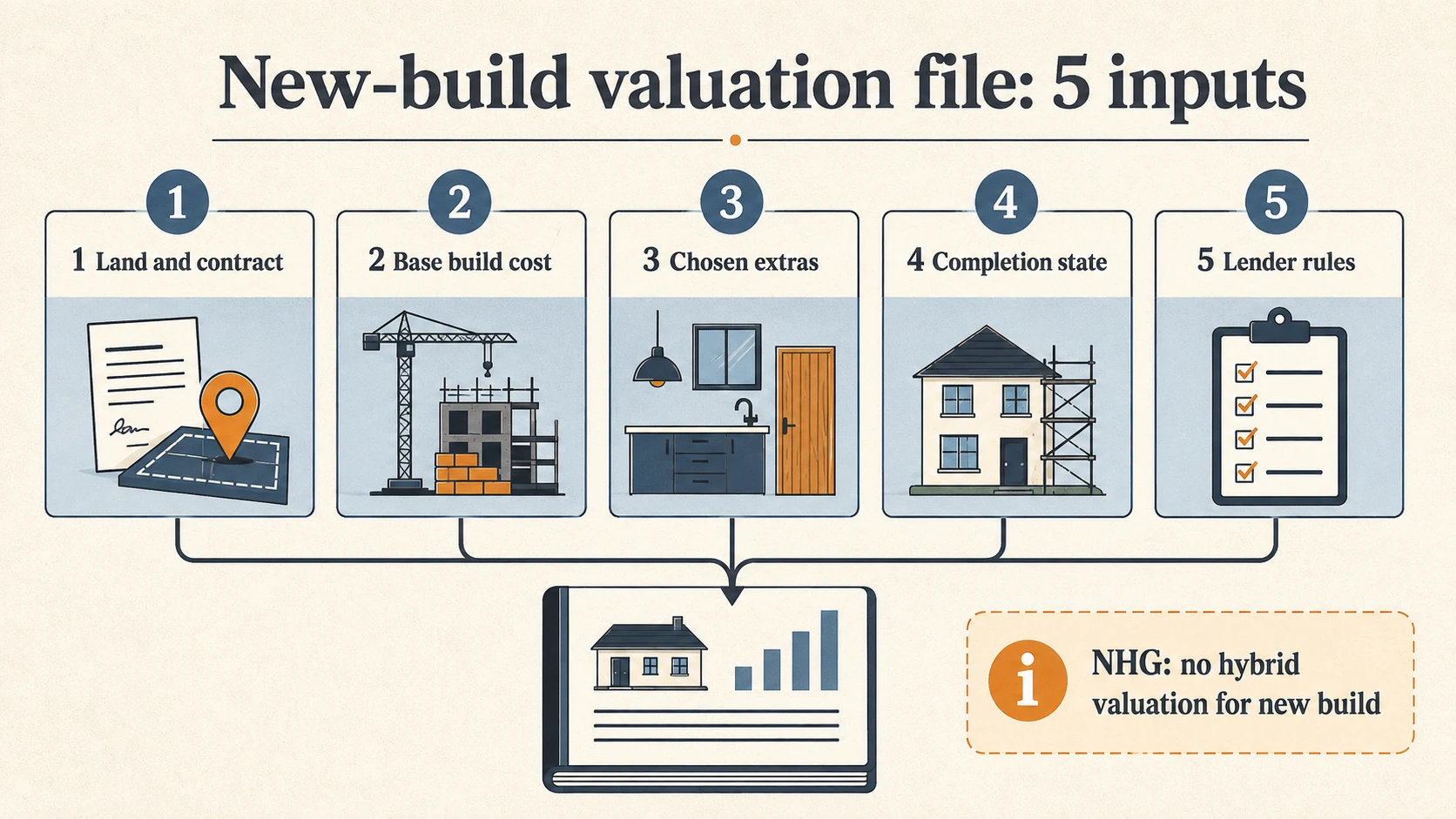
TL;DR: prepare five file inputs
- Land and purchase or construction contract.
- Base construction cost and agreed fees.
- Chosen extras and documented changes.
- Completion state on the valuation date.
- Lender and NHG rules for the accepted report.
NHG’s current valuation explanation states that hybrid valuation is not possible for new-construction homes in the stated context. Ask the lender which physical report and report review it requires before you book.
Ask the lender or adviser which report form, report review and age condition applies.
NHG’s current explanation distinguishes physical, hybrid and model-based valuation and states that hybrid valuation cannot be used for new-construction homes in the stated context.
Ask each professional what the document covers, and give the valuation provider the inspection result when it is relevant evidence.
Collect the signed contract, cost schedule, extras, updated drawings and lender wording.
Before you compare the report, align your purpose, recipient and evidence with NHG valuation requirements.
For this assignment, keep the relevant property or file facts beside NHG valuation requirements before you rely on the conclusion.
When your file raises a related question, compare the facts with NHG valuation report Rotterdam before you choose the report scope.
When your file raises a related question, compare the facts with valuation for new-construction and structural inspection before you choose the next step.
Before you compare the report, align your purpose, recipient and evidence with NHG valuation requirements.
For this assignment, keep the relevant property or file facts beside NHG valuation requirements before you rely on the conclusion.
When your file raises a related question, compare the facts with NHG valuation report Rotterdam before you choose the report scope.
When your file raises a related question, compare the facts with valuation for new-construction and structural inspection before you choose the next step.
Context that informs this decision
NHG physical and hybrid conditions distinguish the forms that must be settled before booking.
When both assignments matter, new-construction valuation and structural inspection keeps their documents and conclusions separate.
mortgage valuation brings lender questions and property documents into the appointment brief.
A new-construction valuation still needs address-specific evidence; compare the contract and construction data with property valuation in Eindhoven only to separate city conditions from the Rotterdam conclusion.
Then compare the file with valuation report contents and ask a focused question before ordering.
Who needs this preparation?
Use this checklist if you are:
- buying a new-construction home in a Rotterdam development;
- preparing a mortgage or NHG application;
- adding kitchen, bathroom, energy or layout extras to the base specification;
- trying to align a staged construction plan with a lender deadline.
These details help you ask a clear question. They do not calculate the value of a particular home or confirm borrowing capacity.
1. Land and the purchase or construction contract
Start with the documents that define what is being bought. Depending on the project, this can include the purchase agreement, construction contract, land terms, drawings, specification and completion provisions. Record the address or plot reference exactly as the lender and developer use it.
Check:
- the plot, unit or address reference;
- the land ownership or purchase terms;
- the base specification and included work;
- completion, handover and delay provisions;
- any conditions that affect the final home or its use.
The valuation question should identify the property and the purpose. A plan number without the matching contract can create an avoidable document question.
2. Base construction cost and agreed fees
Separate the base construction sum from other cost posts. Keep the signed cost schedule, invoices or developer statement that shows what is included. NHG’s new-construction information describes relevant purchase and construction cost context, yet the applicable financing treatment still depends on the product and conditions.
Record:
- the agreed base construction sum;
- land or plot cost where shown separately;
- included connection or completion items;
- contractual fees and allowances;
- payments already made and the stage they relate to.
Do not turn a project budget into a market-value conclusion. The valuer needs the contract evidence and the assignment before deciding how the information is used.
3. Chosen extras and documented changes
Kitchen finishes, bathroom changes, layout alterations, energy measures and other extras can change the completed home. Put each choice beside its price, specification and status. A buyer’s intention, an approved option and installed work are different facts.
For each extra, note:
- what was selected;
- whether it is in the signed contract;
- the agreed cost and any allowance;
- whether it changes area, layout, finish or services;
- whether it will be complete on the valuation date.
If an extra changes the drawings, keep the updated drawing with the cost confirmation. This makes the file easier to test.
4. Completion state on the valuation date
Describe the home as planned, under construction or completed for the stated valuation date. Include the expected handover stage and any work that will remain. A report that assumes completion needs a clear basis for that assumption.
Ask:
- Which parts are complete on the valuation date?
- Which works are contractually committed but unfinished?
- What evidence shows the expected completion state?
- Are there changes after the valuation date that should stay outside the conclusion?
NRVT residential guidance places the valuation date, assignment and assumptions at the centre of the report. Do not merge today’s site condition with a future completed condition without explaining the basis.
5. Lender and NHG rules
A lender may ask for:
- a physical valuation report;
- a named report review process;
- a specific valuation date;
- contract and cost evidence;
- an explanation of assumptions and completion.
Keep the lender’s wording with the file. A general statement about NHG cannot replace the product-specific instruction.
Valuation and structural inspection answer different questions
A valuation addresses market value for a stated purpose and date. A structural inspection examines building condition, defects or technical risks within its own scope. One report cannot silently stand in for the other.
Common mistakes in a new-construction file
- Sending the base specification without the selected extras.
- Treating a quotation as a signed contract.
- Describing planned work as completed work.
- Using a plan with an old plot or unit reference.
- Booking a hybrid form before checking the new-construction rule.
- Assuming a structural inspection gives a market value.
- Leaving the valuation date unclear.
Final verification before booking
Use this five-line check:
- The property reference in the contract matches the lender request.
- The base cost and land terms are documented.
- Extras and changes are separated from the base specification.
- Completion and assumptions are tied to a valuation date.
- The lender has confirmed the accepted form and report review.
If one line is unclear, ask the lender, developer or valuer a focused question. That is easier to resolve before an appointment than after a report is prepared.
FAQ
Can I use a hybrid valuation for a new-construction home?
NHG’s current explanation says hybrid valuation is not possible for new-construction homes in the stated context. Confirm the exact requirement with the lender because product conditions can change.
Do chosen extras belong in the valuation file?
They can be relevant to the completed home and the contract evidence. Record the choice, price, specification and completion state, then ask how the assignment treats them.
Does a new-construction valuation require a site visit?
The lender and applicable conditions decide the accepted form. NHG’s stated new-construction context points to a physical valuation rather than a hybrid form.
Is a construction budget the same as market value?
No. Cost evidence can inform the file, while market value is a valuation conclusion for a stated date and purpose.
Do I need a structural inspection as well?
Ask what risk you need to answer. A structural inspection and a valuation serve different purposes, so one should not be assumed to replace the other.
Which date should appear in the request?
Use the date required by the lender and explain the expected completion state connected to it. Keep later changes separate.
Next step
Check that the purchase or build contract, land details, base construction sum, chosen extras and completion state tell the same story. Ask the lender which report form and date it accepts, especially if you are applying with NHG. If a contract clause or cost post is unclear, contact us with the wording and your question.
Ask about a new-build valuation →