Monument valuation in Rotterdam: 5 evidence checks
Prepare a Rotterdam monument valuation by checking register status, protected elements, permits, condition and comparable evidence.
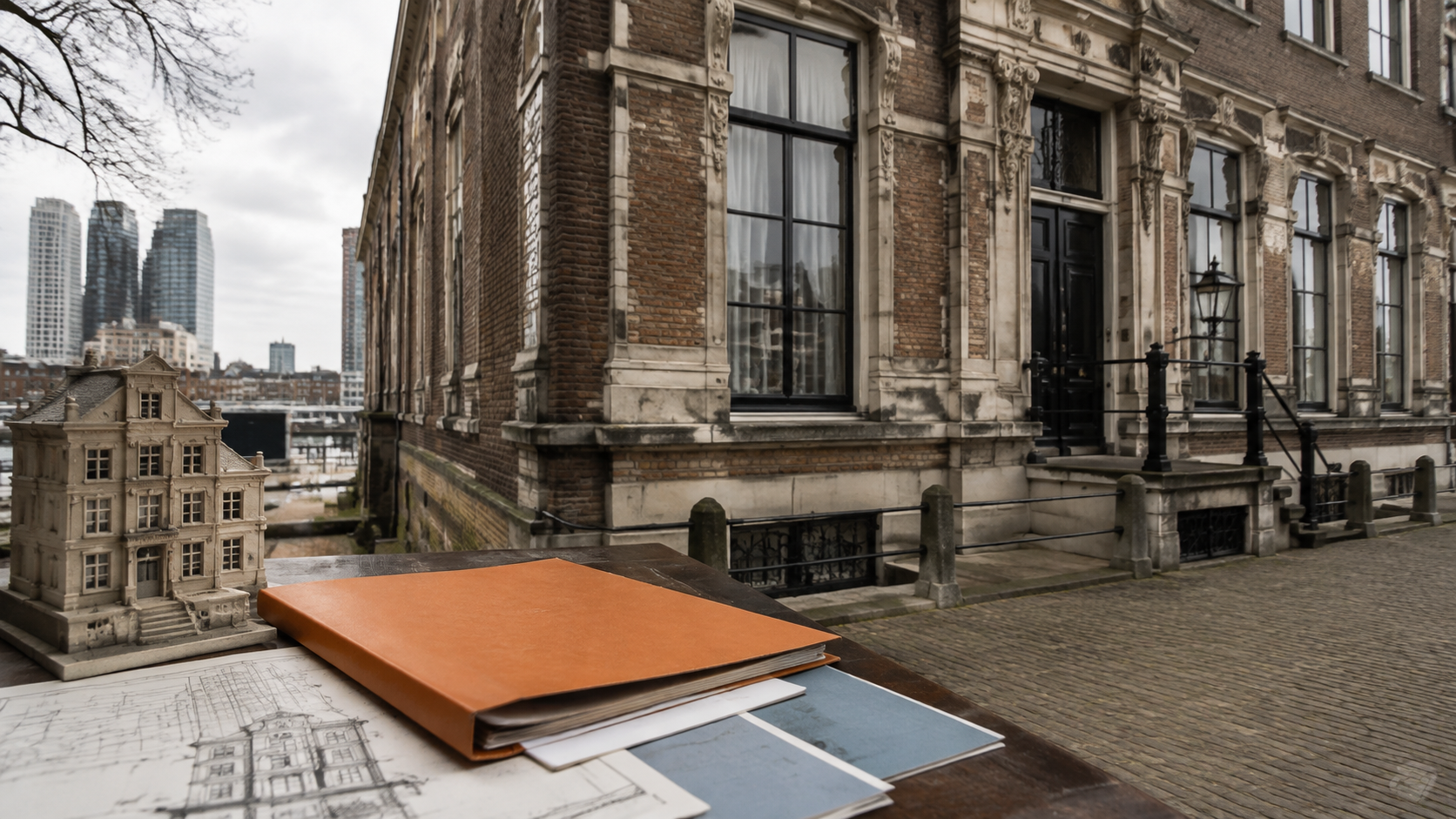
A monument valuation in Rotterdam needs more than a historic-looking façade. Check the register status, protected elements, permits, condition and comparable evidence, then connect those facts to the valuation purpose and date. Heritage status is relevant context, not an automatic value premium.
If you are dealing with a protected or historic property, record register status, permitted work and condition before comparing market evidence.
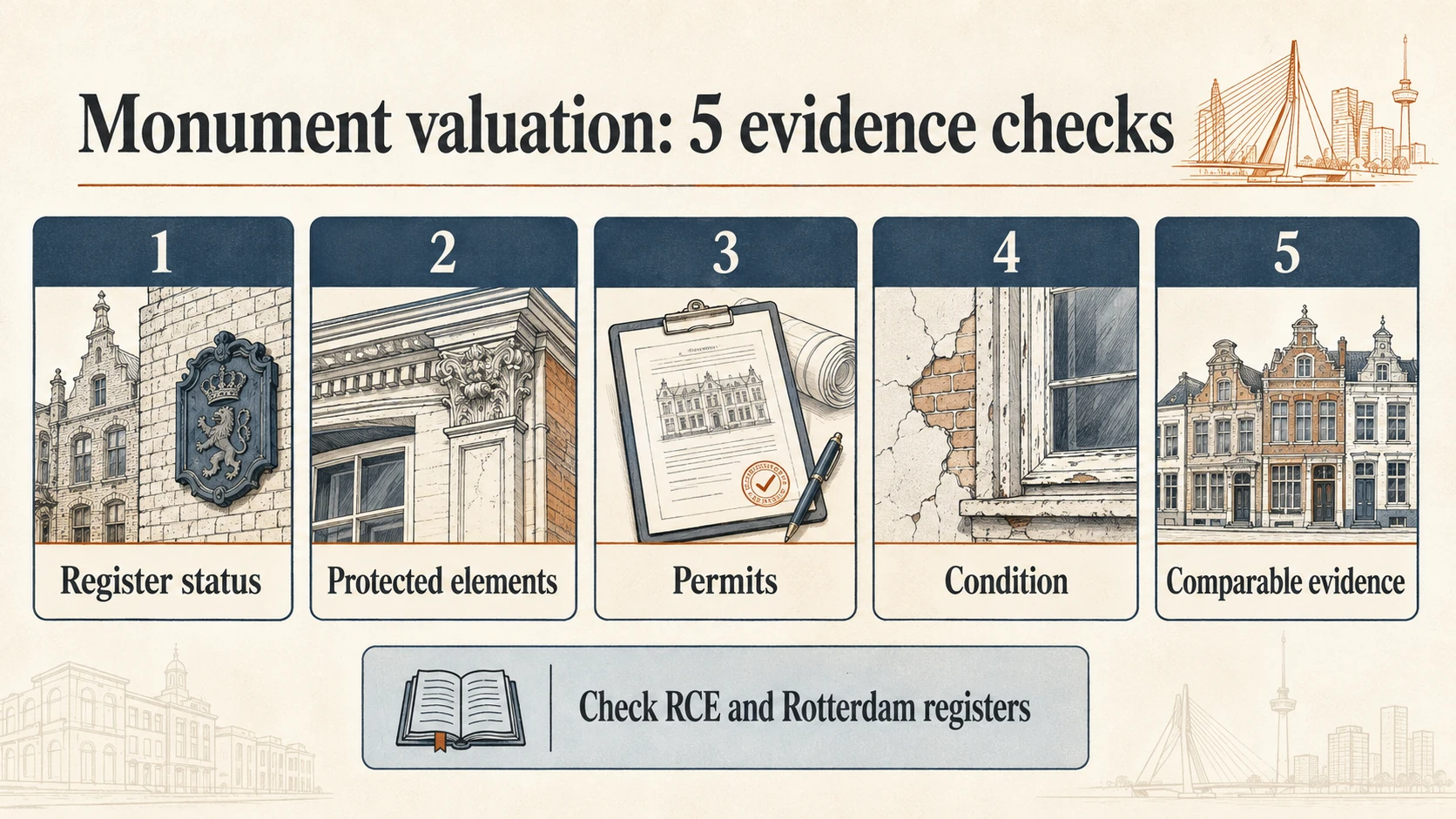
TL;DR: check five evidence layers
- Confirm the register status and exact address.
- Identify protected elements and restrictions.
- Check permits for completed and planned work.
- Record condition, maintenance and technical uncertainty.
- Use comparable evidence that reflects the same property and heritage context.
The visual pairs the five layers of a monument valuation file.
Before you compare the report, align your purpose, recipient and evidence with RCE monument guidance.
For this assignment, keep the relevant property or file facts beside RCE monument guidance before you rely on the conclusion.
Before you compare the report, align your purpose, recipient and evidence with Rijksmonuments Register.
For this assignment, keep the relevant property or file facts beside Rotterdam monument information before you rely on the conclusion.
When your file raises a related question, compare the facts with monumental property valuer Rotterdam before you choose the report scope.
When your file raises a related question, compare the facts with what is a property valuation report before you choose the next step.
Before you compare the report, align your purpose, recipient and evidence with Rijksmonuments Register.
For this assignment, keep the relevant property or file facts beside Rotterdam monument information before you rely on the conclusion.
When your file raises a related question, compare the facts with monumental property valuer Rotterdam before you choose the report scope.
When your file raises a related question, compare the facts with what is a property valuation report before you choose the next step.
Context that informs this decision
When the assignment is provider selection, monumental property valuer fit profiles in Rotterdam make these evidence questions explicit.
A clear evidence trail lets the recipient compare valuation report contents with the purpose, date and assumptions behind the conclusion.
General property documents fit into place through home valuation preparation in Rotterdam before you add the monument-specific layer.
For a monumental property, compare the market setting with property valuation in Eindhoven Centre while keeping heritage and condition evidence separate.
A written assignment can combine home valuation in Rotterdam with valuation costs in Rotterdam so scope and evidence are stated together.
The address-level record behind a monument status is national monuments register.
What a monument valuation means
The term describes a property valuation where heritage status or protected character forms part of the evidence. The valuer still needs the normal property facts, assignment, valuation date, condition and comparable evidence. The extra work lies in identifying what is protected, what can be changed and which costs or restrictions affect the property.
Rotterdam also distinguishes national monuments, municipal monuments and protected cityscapes, so appearance or a listing description is not enough.
Who needs this explanation?
It helps if you are:
- buying or refinancing a historic Rotterdam home;
- planning renovation, restoration or energy work;
- preparing a lender or insurance file;
- comparing a protected property with nearby non-protected homes;
- trying to understand which documents a valuer will ask for.
This page does not decide legal status, permit need, conservation treatment or a value for a particular address.
1. Register status and address
Start with the exact address and the register entry. A national monument, municipal monument, protected cityscape and a historic building without that designation are different contexts. Record the source, entry name, identifying details and the parts of the property covered.
Check:
- the address and house number;
- the register or municipal entry;
- whether the entry covers the whole building, a part or an area;
- any description of significance or protected features;
- whether the current building matches the registered description.
Rotterdam’s monument information says the city has more than 600 national monuments and also has municipal monuments and protected cityscapes. That citywide fact does not settle the status of an individual building. Use the relevant register for the address.
2. Protected elements and permitted change
Read what gives the property its protected character. It may include a façade, roofline, interior elements, structure, plan form, materials or setting. Record the feature and its condition separately. A protected element that needs repair can carry a different file question from an intact element.
Ask:
- Which elements are named or visible in the register description?
- Which proposed changes touch those elements?
- Is the work repair, alteration, extension or a change of use?
- Are drawings, conservation advice or prior decisions available?
The valuation should explain the facts it uses. A broad label such as “historic” cannot replace a property-specific description.
3. Permits and work history
The Dutch government advises checking whether renovation or restoration of a monument needs an environmental permit. The answer depends on the work and the property’s status. Use the municipality or the official permit check for the current position.
For the valuation file, separate:
- work that is complete and documented;
- work that is permitted but not complete;
- work that is planned or only discussed;
- repairs for which no record is available.
Keep permits, drawings, decisions, invoices and completion evidence together. A permit can show that work was authorised. It does not prove the work is complete, defect-free or that it affects value in a particular way.
4. Condition and maintenance
Historic materials and construction details may need a different condition description from a modern home. Record the roof, façade, windows, foundations, services, moisture, timber, masonry and previous repairs where relevant. Use reports, invoices and photographs as evidence rather than broad adjectives.
Ask the valuer how visible condition, known defects, planned maintenance and technical uncertainty will be reflected. A building inspection or conservation opinion can answer technical questions within its own scope; a valuation uses relevant evidence for the stated market-value purpose.
5. Comparable evidence
Comparable sales should reflect more than neighbourhood and floor area. Compare heritage status, protected elements, condition, restrictions, plot, rights, adaptation potential and the date of sale. A modernised historic home and an untouched property may share a street yet require different adjustments.
Record for each comparable:
- address and sale date;
- property type and protected status where known;
- condition and completed work;
- usable area, plot and rights;
- the reason it helps test the subject property.
Does monument status set the value?
No single register label sets a value. Protected character can support demand, identity and scarcity, while restrictions, maintenance, energy work, insurance, financing and permit uncertainty can affect the file in the other direction. The valuer must weigh the property-specific evidence for the stated purpose and date.
Avoid two shortcuts:
- assuming every historic building has the same protected status;
- assuming a permit or restoration automatically increases market value.
Prepare the file in a useful order
- Save the register and municipal information for the address.
- Mark protected or listed elements on drawings or photographs.
- Separate completed, permitted, planned and undocumented work.
- Gather condition, maintenance, inspection and conservation records.
- Ask which comparable properties and valuation purpose apply.
FAQ
Is every historic Rotterdam home a monument?
No. Appearance alone cannot establish national or municipal status. Check the relevant register and protected-cityscape information.
Does a national monument need a permit for every repair?
Permit need depends on the work and status. Use the current government and municipal information for the planned work.
Can a monument be valued for a mortgage?
The lender decides the accepted report and evidence. Tell the valuer and lender about the status, work, condition and rights early.
Does the register state the market value?
No. The register identifies heritage information. A valuation reaches a market-value conclusion for a stated purpose and date.
Should I include a conservation report?
Include relevant reports and ask the valuer how they affect the assignment. A technical or conservation report has its own scope.
Can I compare a monument with a nearby modern home?
You can use it as context, but status, condition, rights, restrictions and adaptation potential need a careful comparison.
Next step
Save the register entry, work history and condition evidence, then write down the question the valuation must answer.
Check the property's register status, gather descriptions of protected elements and separate completed work from planned work. Ask which permits, condition records and comparable evidence belong in the valuation file. If you have a question about the documents or scope, contact us with the address context and your question.
Ask about a monument valuation →