Valuation when buying a property: step-by-step
Follow the valuation step in a Dutch home purchase from borrowing capacity and offer to inspection, mortgage and notary transfer in Rotterdam.

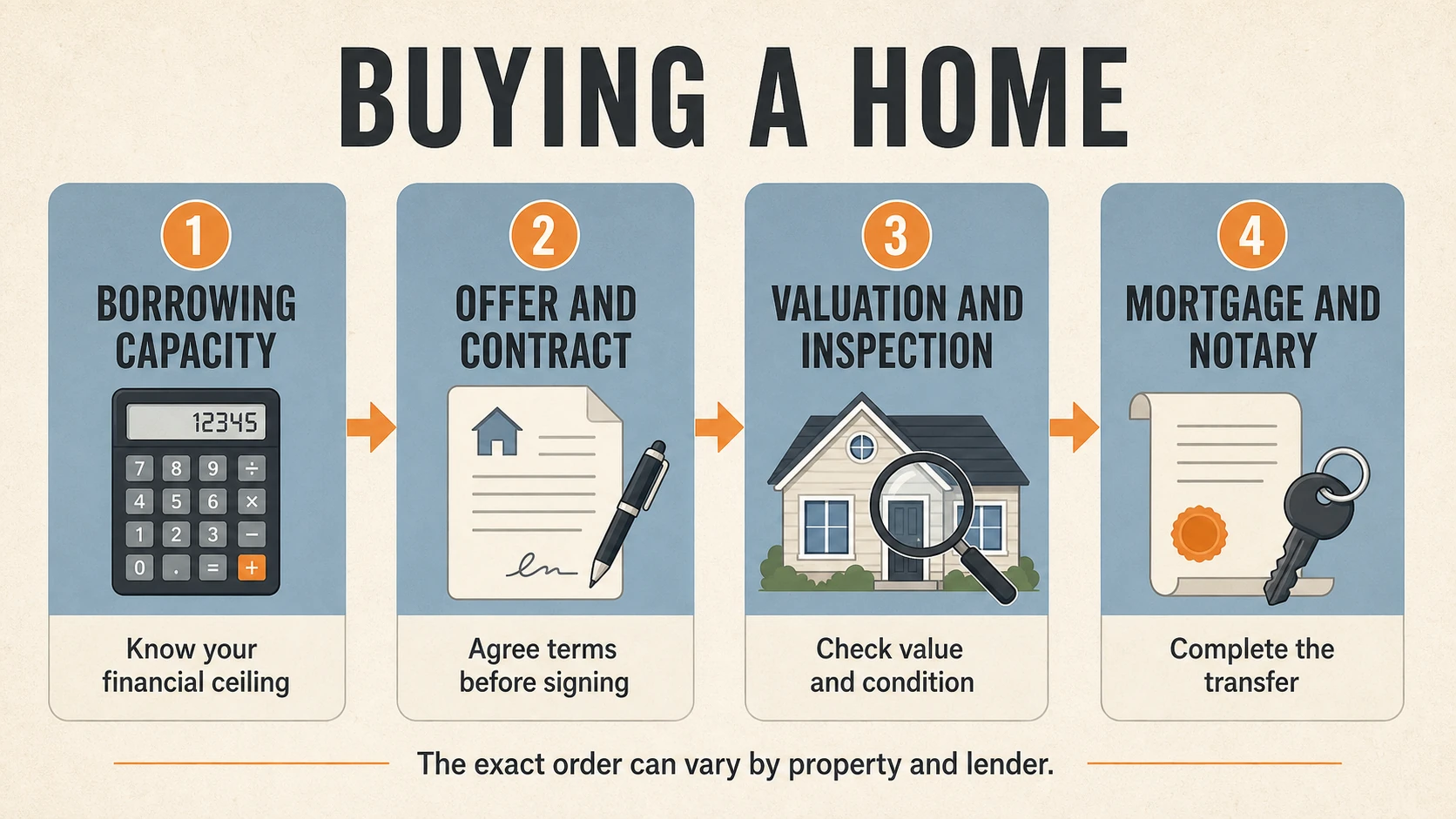
When buying a property, the valuation is one step in a larger sequence. First understand your borrowing capacity, then make an offer and sign the purchase contract if the deal works for you. The lender may then request a valuation for its mortgage file. A structural inspection, mortgage assessment and notary transfer are separate parts of the purchase.
If you are buying, keep the offer, valuation, structural inspection, mortgage assessment and transfer as separate decisions.
TL;DR: keep five jobs separate
The purchase becomes easier to manage when each professional task has a clear job:
- Borrowing capacity: work out what your income, debts and the applicable rules may allow.
- Offer and contract: agree the price and conditions with the seller and complete the purchase documents.
- Valuation: give the lender property-value evidence for the stated purpose and date.
- Structural inspection: investigate condition and possible repairs.
- Mortgage and notary: complete the lender’s checks and transfer ownership through the notary.
The exact order can vary. The government checklist says buyers should calculate borrowing capacity before searching, and it highlights the signed contract, the three-day cooling-off period, inspection and notary transfer as important checkpoints.
Before you compare the report, align your purpose, recipient and evidence with official valuation guidance.
For this assignment, keep the relevant property or file facts beside official valuation guidance before you rely on the conclusion.
When your file raises a related question, compare the facts with for buyers before you choose the report scope.
When your file raises a related question, compare the facts with mortgage valuation Rotterdam before you choose the next step.
Before you compare the report, align your purpose, recipient and evidence with official valuation guidance.
For this assignment, keep the relevant property or file facts beside official valuation guidance before you rely on the conclusion.
When your file raises a related question, compare the facts with for buyers before you choose the report scope.
When your file raises a related question, compare the facts with mortgage valuation Rotterdam before you choose the next step.
Context that informs this decision
For the next conversation, buyer information frames the purchase context and home valuation preparation in Rotterdam orders the property file.
When buying a property, keep the property, purpose and valuation date in one brief, then compare those requirements with a property valuation in Wintelre without transferring its local facts to the Rotterdam purchase.
home-buying information frames the purchase context; if the report part of your file remains unclear, send us the valuation question.
When a lender is involved, the purchase file may need mortgage valuation, and the lender-purpose question is why a bank requests a valuation report.
Who needs this explanation?
This step-by-step explanation is for:
- buyers preparing to purchase a home in Rotterdam or elsewhere in the Netherlands;
- first-time buyers who want to know where a valuation belongs;
- buyers comparing a valuation with a structural inspection;
- applicants who need a lender-ready list of questions before ordering a report.
It is a planning aid, not personal financial advice, legal advice or a guarantee that the lender will approve the mortgage.
Before you search: confirm your starting point
Check borrowing capacity
The government explains that the maximum mortgage is linked to income and the home’s value, with a general maximum of 100% of the home’s value within the applicable rules. Debts, income structure, household details and product conditions still matter. A property search should start with a realistic financing conversation, not a valuation of a home you have not chosen.
Prepare a document folder
Keep income and debt information, identity documents, existing mortgage details if relevant and questions for the adviser together. You may later need property documents, the purchase agreement, apartment information, leasehold documents, permits or improvement details.
Ask the lender about valuation policy early
Ask whether the lender uses a physical valuation, a hybrid form or another accepted source, and which purpose and date it requires. Early information does not mean ordering a report before you have a property. It prevents you from choosing the wrong assignment after an offer.
Step 1: make the offer and handle the contract
An offer is more than a number. It can include conditions about financing, inspection, timing and other matters. The buyer and seller decide which conditions belong in the agreement. Ask a qualified adviser or legal professional what the wording means for your situation.
After agreement, the purchase contract records the deal. The government explains that the buyer has a three-day statutory cooling-off period after receiving the signed contract. That period is separate from any financing or inspection condition. Read the signed documents carefully and record every deadline.
Do not treat the valuation as an automatic confirmation that the price is affordable. It answers a property-value question for the lender. Your income, debts, own funds and contract conditions remain relevant.
Step 2: order the valuation for the right recipient
Confirm the assignment
Before commissioning a report, ask the lender or adviser to confirm:
- the recipient and mortgage product;
- the purpose, such as purchase or an associated improvement;
- the accepted form of valuation;
- the required valuation date and report age;
- any report review or registration requirement;
- the property documents required;
- what happens if the reported value is lower than the purchase price.
Prepare the property file
Provide accurate details about the home. Depending on the property, that can include the purchase contract, floor plans, apartment rights, owners’ association documents, leasehold information, permits, extensions, maintenance and planned improvements. State what is completed, planned or unfinished.
Understand the conclusion
The valuation is for a stated purpose and date. It is not a promise about a future sale price, and it does not replace the lender’s income and debt checks. Keep the report with the mortgage file and ask the adviser how it is used.
Step 3: arrange a structural inspection separately
A structural inspection focuses on condition, defects and possible repairs. A valuation focuses on market value and the evidence required for the stated purpose. The government lists both a structural inspection and a valuation among possible costs when buying a home. The lender may need one, the other or both.
Ask the inspector what the assignment covers and when the report is needed. The government checklist highlights inspection before the transfer of the keys. Your purchase contract may contain its own deadlines or conditions, so check those with a qualified adviser.
For an older Rotterdam home, the inspection questions might include visible maintenance, moisture, roof, installations or foundation-related information. Those are examples of questions to investigate, not a conclusion about a particular home. The valuation should receive relevant confirmed documents rather than an assumption that the inspection answers the value question.
Step 4: finish the mortgage and notary work
The lender completes its assessment of income, debts, documents, the valuation and product conditions. Respond to requests promptly and ask what remains outstanding. If the lender changes the required report form or evidence, confirm the new instruction before paying for more work.
The notary handles the legal transfer and related documents. The government checklist places the transfer of ownership at the notary. A valuation does not transfer ownership and a valuer does not replace the notary.
If the value is lower than the offer
Do not jump straight to a second report. First check that the report has the correct address, purpose, date, property facts and recipient. Then ask the lender and adviser what the lower value means for the proposed mortgage and what options are available under the contract.
Possible discussions can include changing the loan structure, using more own funds, renegotiating with the seller or reviewing whether the transaction still works. Which options exist depends on the agreement, lender and buyer’s finances. A buyer should not assume that a second report produces a higher value.
If the value is higher, borrowing still depends on income, debts, product conditions and the lender’s assessment. A higher value is not an automatic invitation to borrow more.
Common first-time buyer mistakes
- Searching for homes before checking realistic borrowing capacity.
- Ordering a valuation before confirming the lender and purpose.
- Treating the valuation as a substitute for a structural inspection.
- Forgetting the three-day cooling-off period or another contract deadline.
- Describing planned improvements as completed.
- Omitting apartment, leasehold or permit documents.
- Assuming the purchase price and valuation must be identical.
- Treating a valuation as mortgage approval.
Frequently asked questions
When should I order the valuation?
Often after an offer or agreement when the lender has given its instruction, but the exact timing varies. Ask the recipient for the purpose, form and date before commissioning the report.
Is the valuation needed before I make an offer?
Usually the initial financing conversation comes first. A lender may have a product-specific process, so confirm it directly. Do not order a report for a property you have not selected without a clear purpose.
Does the valuation protect me if the value is low?
The report can reveal a difference between the agreed price and the assessed value, but the contract and financing conditions determine what you can do. Get advice on the wording and deadlines that apply to your purchase.
Is a structural inspection mandatory?
The need depends on the property, contract, buyer and lender. It is a different assignment from valuation. Check the purchase documents and ask the relevant professional what is required.
Does a valuation include an inspection?
A valuation includes assessment of property facts relevant to value, but it is not the same as a full structural inspection. Ask each professional to define the scope of the assignment.
Can I use a valuation from another lender?
Only if the new recipient accepts its purpose, form, date and report review. Ask before relying on it.
Does the report approve my mortgage?
No. The lender also checks income, debts, documents, product conditions and affordability.
Next step
Ask the lender for the exact valuation instruction as soon as an offer becomes serious.
Keep the valuation, structural inspection, mortgage assessment and contract deadlines as separate items.
Ask the lender or adviser to confirm the report purpose, accepted form, valuation date and validation. Keep the valuation separate from the structural inspection and check the purchase contract deadlines with a qualified adviser. Contact us if you want help understanding the valuation part of your file.
Ask about a purchase valuation →